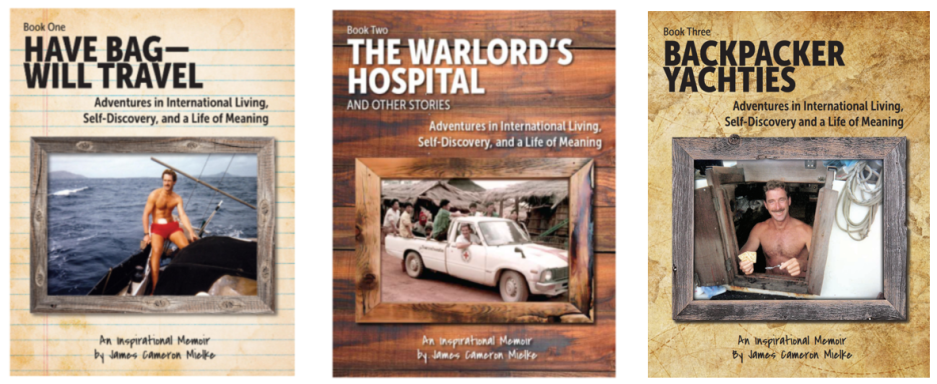
Author’s Note: This is a series of selected highlights from two years (1986-88) of budget backpacker travel through 15 countries and a half-dozen US States – hosted all along the way by national and local YMCAs – from the Pacific Islands to selected Asian countries including: Indonesia, Singapore, Malaysia, Thailand, Burma, The Philippines, Hong Kong, Macau, China, Taiwan, Korea, Japan – and the USA.
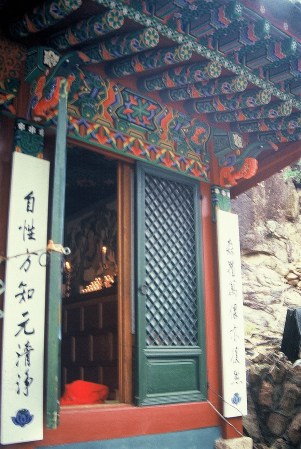
Braving the bitterly cold nights in Seoul – thanks to my toasty mattress on the floor of the ‘yogwan’ (traditional guesthouse) pre-warmed by gas heaters under the floor boards — as icy Manchurian winds whipped down the rocky, barren Korean peninsula.
Dinners out on the town with my Korean friends, followed by coffee at a separate, dedicated coffee lounge, and then to the bar for some Soju — a clear, colorless distilled beverage, typically made from wheat, rice or barely with an alcohol content anywhere from 16% to 54%, and consumed ‘neat’ — straight from the bottle, without being chilled, and without any water, ice, or other mixer – serious stuff!
Even more ‘serious’ was the accompanying bowl of raw garlic cloves (instead of peanuts in the West) taken with the drinks one at a time with chopsticks. Garlic consumption was quite popular in general, and while taking the bus home on these cold winter nights, as the doors swung open, a busload blast of hot garlic breath would issue forth. On other less raucous occasions, we enjoyed drinking a milky-white rice wine called makkole, with a much milder alcohol content of 6% to 9%.

In Korea’s homogeneous “single ethnicity” society — with one race and language enduring for centuries, and a culture deeply influenced by Confucianism — conformity is the norm. It seemed like every Korean man on the street was wearing the same conservative grey business suit, white shirt and dark tie. And while white people from advanced or ‘wealthy’ nations were welcomed with open arms, apparently this was not always the case for the less commonly seen ‘people of color’ perceived to be from a less developed country, and relentlessly looked down upon.
Indeed, I used to kid my friend Bart, who was from Ghana, West Africa, and also volunteering at the Seoul YMCA — suggesting that he must have been the loneliest person in Korea because whenever we walked together down the crowded sidewalks along Seoul’s busy boulevards, the ‘sea of humanity’ would miraculously part as everyone hurried to move away from poor Bart – the only black person in town!
 Arriving in Japan on an overnight ferry from Korea’s southern port city of Pusan, I traveled by train from Shimonoseki City, on the southwestern tip of Japan’s Honshu Island to Kyoto City for a YMCA conference.
While staying with a local Japanese family — eating sushi and sleeping on tatami mats behind sliding paper doors — I proceeded to explore the country — bathing in the simple, balanced harmony flowing through the countryside, the architecture, the arts, and the people.
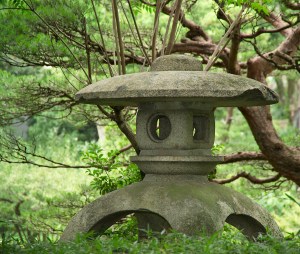 From the perfect gardens in Kyoto and the gentle, lilting resonance of a traditional 13-stringed Koto, Japan’s national instrument played by a woman kneeling in a colorful, silk kimono, to the shroud of lingering gloom from the terror enshrined in Hiroshima Peace Park, to medieval castles and mineral spas, and the rural simplicity of Shukoku Island — and cheerful greetings from beautiful women everywhere, with uninhibited smiles, like swaying bamboos — jet black hair hanging long.
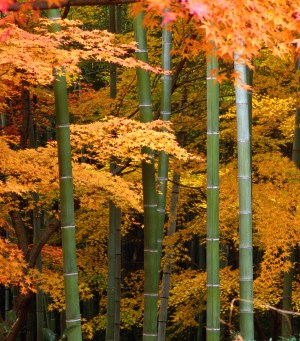 Seated in a neatly manicured garden on a bluff overlooking the lights of the city and along the bridge connecting Honshu Island and Kyushu Island. In the cool, dampness of the evening, a maze of bamboos throws shadows in the artificial light, while young people eager to meet a foreigner for a chance to practice speaking English bring together all the soft gentleness of the people and the place.
The Japanese have mastered the art of providing harmony and balance to life – the graceful shrines, temples, gardens, and hot springs offer gentle release to the stresses of the otherwise dazzling glitter and fast-lane lifestyle out on the lively, modern city streets.

But soon the golden brown harvest of ripe corn and grain would be white with snow – carried on the chill winds of Manchuria blowing down the rocky outcroppings of the Korean peninsula. Sad to leave Japan after such a brief visit – and vowing to return for a longer stay next time.
But the music, the food, the brightly colored temples and shrines, the tall, craggy mountains at Sorak-San National Park in the north, and the delightful fishing ports were calling to me as well, as I boarded the ferry back to Korea’s seaport in Pusan, and sold the coveted Japanese bananas for a good price. I had also done well selling Korean apples when I arrived in Japan.
I must remember her eyes – her bright smile and petite elegance. How I would miss the soft gracefulness and warm generosity of the people – especially the women — who radiate genuine pleasure in being noticed, or curt shyness that melts away with perhaps one more meeting, as if we had been close friends for years. But after four wonderful months exploring Taiwan, Korea and Japan, it was time to drag myself away – and the longer I stayed, the harder it was to leave.
Stay tuned for more stories – coming soon!
 Traveling Road Show